
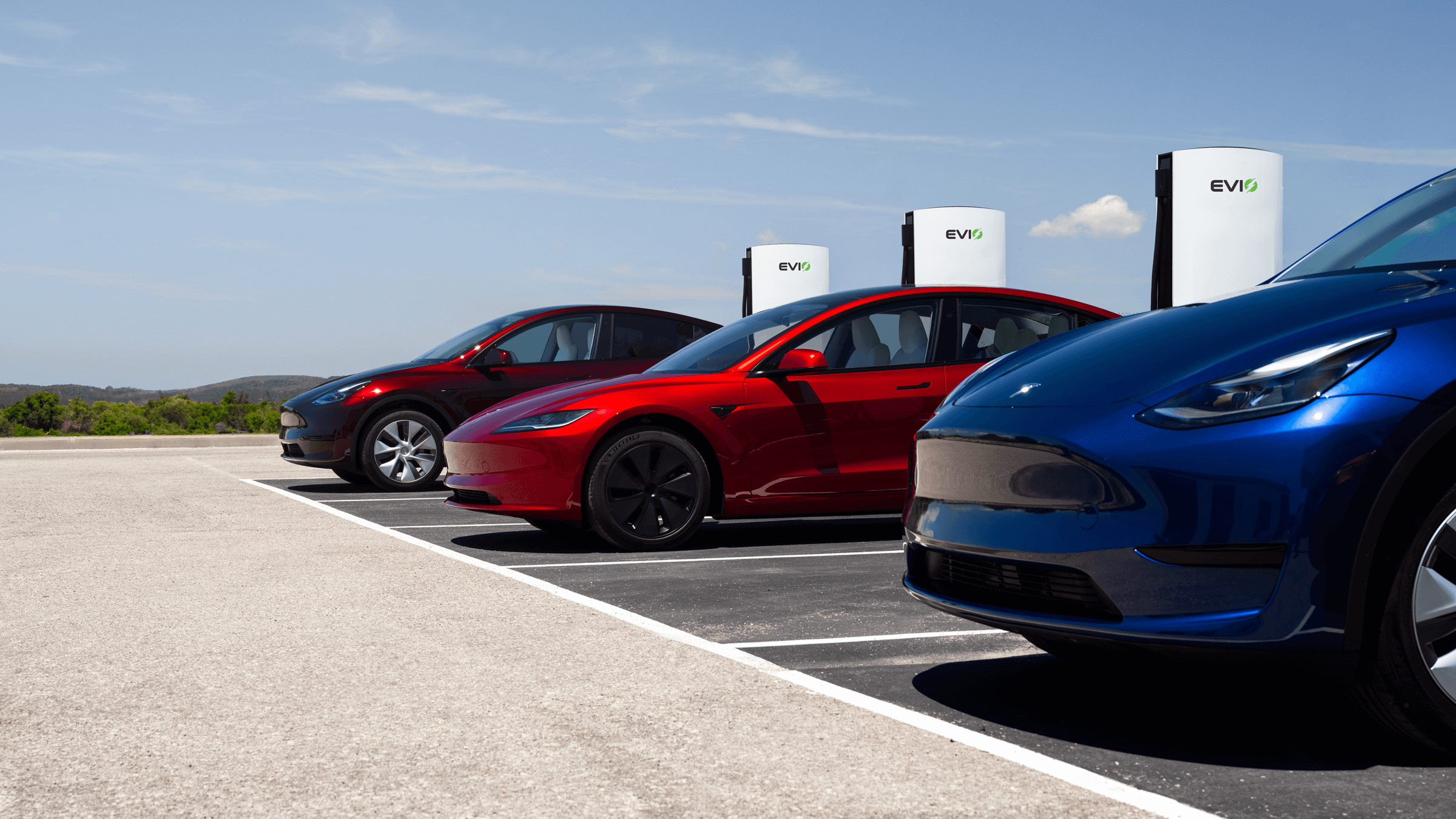
Tesla built the most recognizable charging network in the world by doing something simple and powerful. They placed chargers where drivers actually needed them.
As the EV market expands beyond early adopters, the next phase of charging infrastructure will not be defined by brand alone. It will be defined by behavior. Where do drivers really want to charge? How long are they staying? What do they expect from the surrounding environment? And how can site hosts capture that demand instead of guessing at it?
For EVIO and its partners, the opportunity is clear. The future of high performing charging sites lies in designing around real demand patterns, not assumptions.
Charging Is Not Just About Power. It Is About Purpose.
Tesla drivers do not charge randomly. Their public charging behavior typically falls into three categories:
- Corridor charging during long distance travel
- Destination charging near retail, dining, or entertainment
- Urban top up charging for drivers without home access
Each of these use cases creates a different expectation.
Highway corridor sites need speed, visibility, easy on and off access, lighting, safety, and restrooms. Drivers want to minimize friction. They are often traveling with families. Clean facilities and predictable uptime matter more than premium amenities.
Destination sites serve a different psychology. Drivers are not rushing. They are shopping, dining, or spending time nearby. These locations benefit from thoughtful integration into existing retail ecosystems. Restaurants, grocery stores, lifestyle centers, and big box retail become natural partners. Dwell time becomes revenue time.
Urban sites solve for access. Apartment dwellers and city residents without garages need reliable, convenient charging near home or work. These sites must prioritize accessibility, competitive pricing, and uptime above all else.
When infrastructure is deployed without distinguishing between these behaviors, utilization suffers. When it aligns with real driver intent, it thrives.
Data Over Instinct
For years, charging site selection often relied on available real estate rather than driver data. But Tesla’s network success demonstrates the value of behavioral modeling. Traffic flows, navigation data, vehicle density, trip patterns, and charging session history all inform smarter placement.
The next wave of site development requires similar rigor.
Key indicators that matter include:
- Registered EV density by ZIP code
- Proximity to high traffic corridors
- Average dwell time of nearby retail centers
- Existing charger utilization rates within a defined radius
- Apartment density and percentage of renters
- Tourism patterns and seasonal traffic swings
A charging site is not just an electrical installation. It is a mobility asset. It should be evaluated like one.
EVIO approaches site development through this lens. The goal is not simply to install chargers. It is to build long term infrastructure that aligns with real world demand and delivers measurable return.
The Experience Layer Is the Differentiator
Tesla drivers have grown accustomed to reliability. Plug in, charge, go. That expectation now extends across networks.
Site design must prioritize:
- Clear signage and visibility from main roads
- Adequate lighting and security
- Sufficient stall count to prevent queuing
- Weather protection where possible
- Seamless payment and minimal app friction
Beyond function, experience matters.
Drivers prefer sites with amenities. Clean restrooms, coffee shops, grocery stores, fitness centers, and casual dining options consistently outperform isolated lots. Charging time becomes productive or enjoyable time.
Retail landlords who understand this dynamic are turning charging into a traffic driver rather than a compliance obligation.
Power Strategy Matters as Much as Location
Designing around demand also means designing around future demand.
A site that meets today’s vehicle count but lacks scalable power capacity will underperform tomorrow. Tesla’s continued expansion shows that oversizing infrastructure early often pays off in utilization and brand trust.
Site hosts and developers must consider:
- Available grid capacity and upgrade timelines
- On site energy storage to reduce demand charges
- Solar integration where feasible
- Future proofing for higher power charging
Charging infrastructure is not a short term play. It is a multi decade asset class. Designing with growth in mind protects both uptime and economics.
Retail, Hospitality, and Mixed Use Are the Next Frontier
Tesla drivers consistently seek charging where they already spend time. That means:
- Grocery anchored centers
- Lifestyle retail centers
- Hotels and resorts
- Entertainment districts
- Travel plazas
- Healthcare campuses
These locations combine dwell time with repeat traffic.
For property owners, this represents a strategic advantage. Charging increases visitation frequency, extends dwell time, and supports sustainability goals. For drivers, it integrates seamlessly into daily life.
The lesson is simple. Charging should not feel like a detour. It should feel like a natural extension of a trip.
From Guesswork to Data Driven Deployment
Tesla’s early advantage came from listening to drivers and building accordingly. The next generation of charging infrastructure must do the same.
Where do Tesla drivers want to charge next?
They want to charge where it fits naturally into their lives. On the road when traveling. At the store when shopping. Near home when they lack a garage. At hotels when they stay overnight. In well lit, safe, reliable locations with amenities that make the time worthwhile.
Designing Supercharger sites around real demand means combining data, behavior insights, power strategy, and retail alignment into one cohesive plan.
For EVIO, that is not just a design philosophy. It is a development strategy.
Charging infrastructure that follows real demand does more than power vehicles. It powers utilization, revenue, and long term growth.